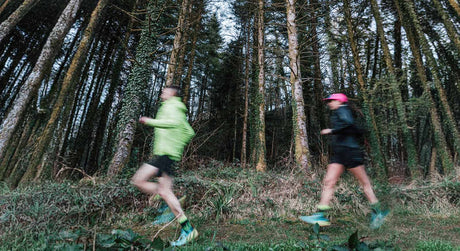
The UTMB® is not just a long race. It is a true ultra-trail where you may go from warm to cold, dry conditions to rain, day to night, smooth running to highly technical terrain. Your outfit must therefore be designed as a complete system.
Dressing properly for the UTMB® means finding the right balance between protection, breathability, comfort, weight, access to your gear and the ability to adapt when conditions change. The goal is not to carry “as much as possible”, but to choose reliable, tested pieces that are easy to use and suited to your race pace.
This guide helps you organize your overall UTMB® gear: base layer, waterproof jacket, trousers, pack, headlamp, poles, hydration, nutrition and gear organization.
Why your UTMB® outfit should be designed as a system
During the UTMB®, you do not dress for a single type of weather. You equip yourself for an ultra in the mountains, with temperature changes, night sections, slow climbs, technical descents and possible stops at aid stations.
An effective outfit must meet three needs: allow you to run comfortably, protect you when conditions deteriorate, and remain easy to manage when you are tired. This is where the layering system becomes important.
Your base layer should remain breathable, comfortable and stable with a hydration pack.
Your jacket, trousers, warm layer and accessories should help you manage rain, wind, cold and waiting.
Your gear should be easy to take out, put on, store and find again when fatigue sets in.
Your base layer: the foundation of your comfort
Your base layer is what you wear for most of the race. It should be breathable, minimize chafing and remain comfortable with a pack. In an ultra such as the UTMB®, textile comfort becomes a real concern: a T-shirt that rubs, shorts that shift or fabric that retains moisture can become very irritating after several hours.
Your top: breathability, quick drying and comfort under your pack
For your top, choose a technical jersey that wicks moisture well, dries quickly and remains comfortable under your pack straps. Seams, shoulder stability and ventilation are more important than weight alone.
If you run for a long time with a hydration vest, avoid choosing solely the lightest top. Also consider the contact zones, seams and stability under the pack.
A versatile top for long efforts, combining comfort, breathability and adjustability with its half-zip.

An ultra-lightweight, breathable top, ideal for hot sections or runners looking for an exceptionally lightweight feel.

Bottoms: shorts, compression shorts or 2-in-1?
For the UTMB®, your choice of bottoms depends mainly on your habits, but also on your tolerance for chafing and your preference for support to stay comfortable for hours. 2-in-1 shorts can be a good compromise: the freedom of shorts, the support of integrated compression shorts and accessible storage, depending on the model.
If you are prone to chafing between the thighs, compression shorts or 2-in-1 shorts are often more reassuring than classic shorts. The key is to test the model on a long run, with sweat, a pack and elevation gain.
Shorts with integrated compression shorts and a storage waistband, useful if you want to combine support, freedom of movement and quick access to small essentials.

Lightweight, breathable compression shorts for greater stability and reduced fabric movement over long periods.

The waterproof trail jacket: a piece not to overlook
The waterproof jacket is one of the most important pieces of your UTMB® gear. It must protect you from rain and wind while remaining breathable enough to prevent too much moisture from building up inside during exertion.
For a mountain ultra, focus on the balance between waterproofing, breathability, weight, compactness, hood, ease of putting it on, and compatibility with your pack.
An ultra-lightweight, compact jacket featuring an MP+® 25K / 50K membrane. Its gusset, compatible with packs up to 12 L, allows you to put it on over the vest without completely reorganizing your gear when the weather changes.
A good choice if you’re looking for a lightweight, highly breathable jacket.
View the jacket
Waterproof pants: essential mountain safety
Waterproof pants may seem secondary as long as the weather is good. But during a long mountain race, they become important as soon as rain, wind, cold, or a long period of walking sets in.
The right pants should stay compact, be easy to put on, and provide sufficient protection. One practical detail to check: can you put them on quickly without taking off your shoes? In an ultra, this detail can really matter.
Ultra-compact waterproof pants designed to stay in your pack and be used when conditions deteriorate. Their main benefit: providing extra protection without unnecessarily adding weight to your gear.

The trail running pack: organize your gear without being weighed down
At the UTMB®, your pack is your command center: water, nutrition, jacket, headlamp, battery, gloves, beanie, phone, emergency blanket, mandatory equipment, and accessories must be accessible at the right time.
The right choice depends on your level of self-sufficiency, how you organize your gear, and how much equipment you want to keep accessible without stopping. If it’s too small, the pack becomes difficult to organize. If it’s too large, you risk distributing the load poorly.
A minimalist choice for runners who want to stay light, with enough capacity if their gear is well optimized.

A more versatile pack if you want more storage, better organization, and a more comfortable volume allowance.

How should you organize your pack for UTMB®?
Organize your pack by frequency of use. Items you use often should be accessible at the front: soft flasks, gels, bars, phone, and small accessories. Items you use less often can go in the back: pants, warm layer, emergency equipment.
Keep your jacket, headlamp, and nighttime accessories in areas that are easy to find. At night or in the rain, you don’t want to empty your pack to look for an essential item.
The headlamp: see, be seen, and stay focused
UTMB® involves running at night. Your headlamp must therefore be chosen carefully: brightness, battery life, comfort, stability, a backup battery, and ease of use with gloves or cold hands.
On climbs, you can reduce the intensity to save battery power. On technical descents, increase the output to better read your footing and anticipate obstacles. Nighttime is mentally tiring: reliable lighting helps you stay focused.
A powerful headlamp for nighttime sections, technical descents, and moments when terrain visibility becomes essential. This new model features a light that complies with UTMB® recommendations.
3h30 to 30h30 of battery life depending on the mode used.
View the headlamp
Poles: useful if you know how to use and carry them
During an ultra, poles are almost essential when they are allowed, as is the case at UTMB®. They will help you greatly, particularly on long climbs and technical descents. They help distribute effort, relieve your legs, and improve stability. But they require proper practice.
If you set out with poles, train with them. Practice alternating poling, double poling, storing them, and transitioning. On race day, your movement should be automatic.
A compact, lightweight pole, suited to long trails with alternating running sections and climbs using poles.

A practical solution if you often switch between holding your poles and storing them, without wanting to remove your pack at every transition.

Hydration and nutrition: maintaining energy without overloading your stomach
During the UTMB®, hydration and nutrition need to be regular, accessible, and tested. You should be able to drink frequently, eat without stopping for too long, and vary the formats to avoid flavor fatigue.
Organization is just as important as the products. Prepare your pockets beforehand, separate your intake into portions, and keep a simple reserve for moments when you no longer feel like having something sweet or when your stomach becomes more sensitive.
Accessible soft flasks, plain water, electrolytes, or an energy drink depending on the heat, duration, and your tolerance.
Alternate gels, bars, drinks, aid-station supplies, and foods you know you can digest after several hours.
Organize into blocks: what you’re eating now, what you’re saving for later, and what you’re keeping as a backup.
Accessories not to overlook
Small accessories may seem secondary, but over a race this long, they often make all the difference. Gloves, a beanie, neck gaiter, cap, sunglasses, suitable socks, anti-chafing cream, or blister plasters can help you avoid suffering through the race.
The goal isn’t to pack too much, but to have the right essentials to manage changing weather, long descents, nighttime, sun, chafing, and rest stops.
Cap or headband, beanie depending on the conditions, neck gaiter for cool or windy sections.
Gloves suited to the weather and usable with your poles, headlamp, and phone.
Trail socks tested over long distances, blister management, and a spare pair if your logistics allow.
Sunglasses, cap, sun protection, and breathable clothing for exposed sections.
General checklist for dressing for the UTMB®
This checklist does not replace the official mandatory equipment list, which should always be checked before the race. Instead, it helps you think of your equipment as a coherent whole.
| Category | Goal | Point to check |
|---|---|---|
| Technical shirt | Breathability, quick drying, and reduced chafing | Comfort under a pack and seam construction |
| Shorts, compression shorts, or 2-in-1 | Staying comfortable over long periods | Chafing, support, pockets |
| Waterproof jacket | Protection from rain, wind, and cold | Waterproofing, breathability, packability |
| Waterproof trousers | Adding weather protection | Easy to put on and lightweight |
| Trail running pack | Carrying gear, water, and nutrition | Volume, access, stability |
| Headlamp | See, be seen, and stay alert at night | Battery life, power, backup battery |
| Poles | Relieving your legs and improving stability | Technique, storage, carrying |
| Accessories | Managing cold, sun, chafing, and the unexpected | Easy access and testing on a long run |
In summary: what outfit should you choose for the UTMB®?
When dressing for the UTMB®, think in terms of a system first: a breathable base layer, reliable weather protection, a well-organized pack, a tested headlamp, accessible nutrition, and accessories suited to the mountains.
The right equipment isn’t what looks perfect on a product page. It’s what you have tested in real conditions, know how to use quickly, and can stay comfortable in after several hours of effort.
Cold-weather or heatwave kits deserve specific consideration. But to build your UTMB® essentials, remember the basics: breathability, protection, accessibility, stability, and simplicity. The clearer and more manageable your equipment is, the more you can focus on your race.