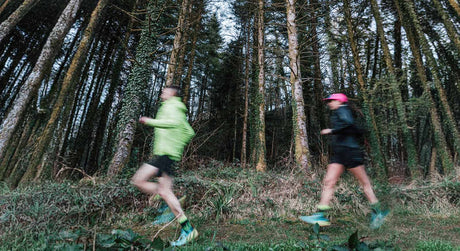
The Marathon des Sables® is the legendary event, the extreme challenge where managing effort, equipment, and mindset is crucial since you must run self-sufficiently in food under temperatures that can exceed 50°C.
We are fortunate to share advice from Mérile ROBERT, a Marathon des Sables® veteran with seven participations, including two podium finishes in 2018 and 2021. Thanks to his experience in prestigious Ultra Trails like the UTMB®, he also won the Grand to Grand Ultra in the United States in 2022. For the MDS®, he has refined his gear and preparation to compete with the Moroccan elite.
If you participate in the 2025 edition, you might have the chance to meet him, this time alongside a joëlette team. Don’t hesitate to approach him!
Mérile, what are your training secrets for the Marathon des Sables®?
"Preparation for the Marathon des Sables® mainly relies on a progressive increase in training distances, favoring flat terrain. The main goal is to optimize your running economy to reduce effort with every step. This ability is perfected by exposing yourself directly to the demands of the event."
The 2 key points of training:
Build your endurance and resistance
Endurance is essential in preparation. You need to progressively increase training load by adding long runs with a 6 to 8 kg backpack. The goal: to get the body used to effort under load.
The preparation must also replicate the specificities of the event:
-
- Repeated long efforts over several days.
- Heat and monotony of the course. You need to get used to moving along long straight lines, like those of a canal, to prepare mentally.
- Repeated long efforts over several days.
A gradual increase in load
A preparation cycle of 7 to 8 months is necessary, with a gradual increase in load. From December, you should be able to run 50 to 60 km per week.
Twice-daily training is a good strategy to increase volume and improve recovery. The body adapts to endure the distance. At the Marathon des Sables®, recovery is just as crucial as moving forward.
And the sand, how do you handle the tough dune sections?
"Contrary to what one might think, sand only makes up 20 to 30% of the course. The rest consists of hard tracks, rocky paths, and uneven terrain. It is therefore essential to vary your training surfaces to get used to less regular foot placements and develop good ground reading skills. Avoid running only on asphalt or overly maintained trails."
What do you think are the 3 key points of race management?
“Beyond training volume, it is essential to acquire specific skills:
- Learn to manage your effort and run/walk at the race’s average paces.
- Adopt a conservation mindset, making sure to preserve your resources.
- Get used to alternating effectively between running and walking, especially during long run-hike outings.”
Managing boredom and staying focused
The Marathon des Sables® will test your mental strength: endless straight lines, blazing sun, endless landscapes. In these moments, boredom can quickly set in and slow your motivation.
To counter it, focus on simple but effective actions. Use your food protocol as a guide: hydrate and feed yourself regularly. Set reminders on your watch so you don’t have to think about it. Every sip of water, every bite becomes a mini-goal to pace your race and occupy your mind.
By breaking these long sections into smaller stages, you’ll stay on track without being overwhelmed by monotony.
What do you do to optimize recovery between each stage?
“Recovery starts as soon as you cross the finish line and plays a key role in being able to start each day in the best conditions.”
Post-effort hydration and nutrition
The water provided at the camp is usually enough to properly rehydrate after effort. But to combine recovery and pleasure, consider bringing some tea bags or dehydrated soup. Light and practical, they provide real comfort daily.
Another must-have: the recovery drink. Rich in carbohydrates, proteins, sodium, minerals, and vitamins, it helps you recharge your energy and muscle reserves after hours of effort under crushing heat.
Rest and active recovery
Rest, yes, but without neglecting active recovery. After finishing, walking for a few minutes stimulates blood circulation and aids recovery. Also consider compression socks to reduce muscle fatigue and better start the next day.
The MDS® is a self-supported race, how do you advise managing food and nutrition?
“One of the most common mistakes is to start with too much food for fear of running out.”
Prevent dehydration to better face the desert
In the extreme conditions of the Marathon des Sables, hydration is a necessity. Waiting until you’re thirsty? A mistake that can be costly. Dehydration limits performance and often strikes too late. To avoid it, drink regularly, even in small sips. Good hydration balance is the key to lasting the distance and better managing the desert’s overwhelming heat.
“During the race, I take neutral-flavored sports drinks, which I dilute a lot and alternate with plain water. At the bivouac, I also have a recovery drink. It’s essential to restore levels after several hours of effort in a hot and dry environment.”
Optimal freeze-dried nutrition
“Freeze-dried meals offer an optimal weight/calorie ratio and are easy to prepare at the bivouac. To avoid digestive discomfort, it’s best to avoid spicy dishes. One of the most common mistakes is to start with too much food out of fear of running out. In reality, the feeling of hunger is normal but temporary. The key is to ensure an overall sufficient energy intake throughout the event.”
The Marathon des Sables® organization recently updated the list of mandatory equipment, adding 14 broth cubes. This new measure aims to ensure mineral salt intake and facilitate recovery, especially in a hot and demanding environment. These cubes will be a key element to maintain hydration and electrolyte balance throughout the event. Make sure to include this new requirement in your gear to be fully prepared.
Supplement your intake with energy snacks
In addition to main dishes, certain foods help improve dietary comfort and provide essential nutrients:
- Dried meat: rich in protein, it helps with recovery and adds flavor.
- Salted nuts (almonds, cashews, etc.): a source of energy, good fats, and salt, essential to compensate for losses due to sweating.
- Freeze-dried soups: they provide a comforting effect and promote hydration after exertion.
- Mérile sometimes complements her meals with vermicelli pasta, a simple solution to adjust portions according to her energy needs.
Raidlight has partnered with MX3-Nutrition to design freeze-dried nutrition packs. The 7-day desert pack will provide you with all the rations needed to last the entire duration of your race.
Discover our nutrition plan specially designed for a 7-day desert race by clicking on this link.
Do you think trail poles are useful for the MDS®?
“During the Marathon des Sables®, 60% of finishers move at speeds between 7 km/h and 4.5 km/h, while 26% move at less than 4.5 km/h. These speeds clearly show the importance of walking in this event, just as much as running. That’s why it’s essential to work on Nordic walking technique. This method not only helps manage effort on difficult terrain but also reduces fatigue by optimizing the use of the upper body and poles to maintain a good pace throughout the race.”
The Raidlight desert guide: the bible for desert races.
Future participant, to best prepare you for demanding races like the Marathon des Sables®, Raidlight offers you a comprehensive guide dedicated to desert races.
As a desert specialist for 25 years, we designed this guide to support you and share all our practical advice: preparation and organization of your trail bag, nutrition, equipment, training, life at the bivouac… This guide is designed to meet the specific needs of trail runners, whether you are a beginner or experienced.
Mérile also shares other practical advice, especially about equipment.
Download our free guide
Also discover a series of articles on our blog: training plans, advice on choosing your trail shoes, tips for preparing and organizing your trail bag…
- How to choose your shoes for the Marathon des Sables®, the Half Marathon des Sables®, or the Raidlight Desert Trophy?
- What equipment for the Marathon des Sables®, the Half Marathon des Sables®, or the Raidlight Desert Trophy?
- How to prepare and organize your bag for the Marathon des Sables® or the Raidlight Desert Trophy?
By following these tips, you'll be ready to face the Marathon des Sables® in the best possible conditions. Rigorous preparation, the right equipment, and a well-thought-out strategy will make all the difference on the ground. Stay focused, manage your effort, and pay close attention to every detail of your preparation. Good luck, and may this adventure be an unforgettable experience that leaves a lasting mark on you!