In trail running, gear isn’t just about comfort. It mainly allows you to run in good conditions, on sometimes unstable terrain, with weather that can change quickly, and with an effort that’s less linear than road running.
When you run, it’s tempting to think everything depends on motivation or physical level. In reality, a good start in the discipline also involves coherent gear. The goal isn’t to buy everything at once but to prioritize what really matters to run with more comfort, safety, and consistency.
👉 What you’ll find in this article
- Why the shoe remains the true foundation of your trail gear.
- How to build a simple, functional outfit suited to the effort.
- When a trail vest really becomes useful.
- How to adapt your gear according to distance, terrain, and weather.
The shoe: the true foundation of your trail gear
Before thinking about carrying gear or accessories, you first need to secure what’s under your feet. In trail running, the shoe plays a central role: it helps you better manage uneven terrain, maintain proper grip, and run with more confidence on the trails.
This choice is crucial because an unsuitable shoe can quickly cause discomfort, make you hesitate on your footing, or make the run more challenging than it should be. Conversely, a coherent base helps you run with more confidence and continuity, whatever your level.
The right model always depends on your terrain, your running style, and how often you run. The smart move is to think in terms of real use rather than marketing promises.
The smart move: choose a shoe suited to your most frequent terrains and your actual level. Avoid models that are too extreme or too minimalist, as they are often more demanding and likely to cause discomfort if they don’t match your practice. In trail running, the right choice is the one that gives you stability and consistency in your outings.
The Ultra Max shoe is a solid choice if you’re looking for a model designed to chain outings with more comfort and consistency. It’s a sensible option to build your practice on varied terrain without going for a shoe that’s too extreme.
Discover
Fabric: comfort, regulation, and freedom of movement
Once the shoe is chosen, the fabric becomes the second essential building block. In trail running, you don’t always run in stable conditions: the temperature can change, exposure varies, and intensity shifts from climbs to accelerations. Your clothing must therefore support your effort without weighing you down or restricting you.
No need to pile on layers to gear up well. A simple, breathable, and well-thought-out outfit is often enough to cover the essentials. The idea is to avoid clothes that hold moisture, restrict your movements, or become uncomfortable over the kilometers.
Top: stay as dry as possible
A well-chosen technical jersey helps better wick sweat and maintain a more stable comfort feeling. This is especially useful in trail running, where intensity can quickly rise on a climb then drop on a flat or descent.
The Ecodry jersey fits well into a simple, technical trail outfit. It helps build a breathable textile base, comfortable during effort and suited for regular trail runs.
Discover
Bottoms: run freely without neglecting practicality
Shorts or tights aren’t just about comfort. They also contribute to the smoothness of your stride and your ability to carry essentials. On short runs, a few well-placed pockets can make a real difference for keeping keys, some nutrition, or a small useful accessory on you.
The Trail Raider shorts effectively complete a first trail outfit. They allow you to run with more freedom of movement while adding practical features to carry essentials on short to medium runs.
Discover
Understanding the 3-layer logic
In trail running, we often talk about the 3-layer rule. Even if you won’t need it every time, this logic is useful to understand from the start because it helps you gear up smartly according to conditions.
The first layer manages sweat. The second helps retain heat. The third protects against wind and bad weather. This setup lets you adjust your outfit based on the weather, altitude, or duration of effort, rather than relying on a single piece meant to do it all.
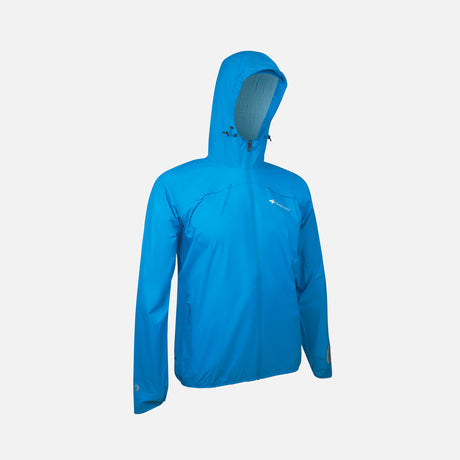
The most important thing to remember is this: a lightweight and protective jacket can quickly become essential, even if the weather seems fine at the start.
The trail vest: useful when you gain autonomy
The trail vest isn’t necessarily the first purchase to make, and that’s exactly what needs to be clarified. Many trail runners start by looking at the pack, while their priority need is often elsewhere. Carrying gear becomes truly important as soon as the outing gets longer, when you need to carry water, a jacket, or some food, or when you’re in a less predictable environment.
From that point on, running without a carrying solution quickly becomes impractical. A good vest should stay stable, fit your body properly, and allow easy access to what you need without breaking your rhythm.
Remember: the vest is not the starting point of trail gear, but it quickly becomes essential as soon as you want to run with greater autonomy.
When autonomy becomes a real concern, the trail vest takes its full place. This selection helps identify a volume and carrying capacity suited to your practice without unnecessarily overloading your outings.
Discover
Adapting your gear to your outing
There is no perfect trail gear in absolute terms. What matters is the match between your equipment and the planned outing. A short loop on familiar terrain doesn’t require the same preparation as a longer, hilly run or one exposed to changing weather.
Before heading out, get into the habit of checking four things: distance, elevation gain, terrain type, and weather conditions. These should guide your choices. This approach will help you avoid being under-equipped but also prevent carrying unnecessary bulky gear.
On a short outing, with stable weather and familiar terrain, you can stick to a simple setup with just the essentials.
As soon as the duration increases, the terrain gets more challenging, or conditions become less certain, your gear needs to step up.
What to remember
Being well-equipped for trail running doesn’t mean buying everything at once. The key is to prioritize. Shoes come first because they directly influence how you move on the trail. Then comes clothing, to better manage effort and conditions, followed by carrying gear as your practice becomes more autonomous.
By progressing in this order, you build a coherent, truly useful set of gear aligned with your actual progress. This is what will allow you to run with more enjoyment, more comfort, and fewer mistakes in your trail running practice.