Protecting yourself from the sun while trail running: the study that wants to change our habits
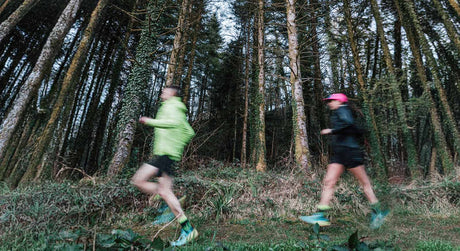
This year, Chamonix hosted, during UTMB® week, a major scientific study dedicated to photoprotection in trail running. Led by an international team of French and American researchers from the University of Michigan and French dermatologists, this project directly questions our habits regarding UV exposure. The team chose to go beyond simple data collection by launching SunBeast, an educational program aimed at athletes. The goal: to spread practical advice based on science and offer concrete tools to boost sun protection without compromising performance. Supported by Raidlight, it puts the health of trail runners at the heart of the practice.
Meeting with dermatologist and trail runner Stéphanie Leclerc-Mercier, the driving force behind the initiative.
« trail runners don't protect themselves enough from the sun »
A trail runner-dermatologist on the front line
For several years, Stéphanie has noticed that "trail runners don't protect themselves enough from the sun." This observation pushed her to launch a research project in collaboration with several French and American researchers. "We're thrilled to be here in Chamonix, we've been working for months on setting up this study which aims to find out if trail runners protect themselves enough and what we could do to make sun protection in trail as simple as grabbing a flask, a gel, or a bar."
The UV vs. thermoregulation dilemma
The textile question is central, but finding the right balance is a real headache. Some fabrics protect better from UV... but with the risk of overheating. "In theory, the thicker and tighter the fabric, the better protected we'll be," confirms Dr. Leclerc-Mercier.
But this choice has obvious limits for a trail runner in full effort. A fabric that's too heavy or poorly designed quickly becomes uncomfortable: "if it's a thick and non-technical fabric, we'll get very hot and won't be able to wear it," she explains. Another detail to consider: "light fabrics protect less well than dark fabrics."
So it's up to brands to offer adapted solutions. For the specialist, the challenge is clear: "That's why it's important that sports brands make photoprotection products with UV fabrics, light and technical."
« even on black skin, you have to put on sunscreen »
UV rays, an invisible danger for the skin... and the eyes
If the skin is the first target, the eyes aren't spared either: "UV rays impact the skin but also massively affect the eyes," points out Stéphanie Leclerc-Mercier. Choosing glasses then becomes way more than a fashion accessory: "in the mountains, it has to be at least a 3 and for some even a 4 (sun protection index rated from 0 to 4, ed.). Ophthalmologists all agree on that."
Another common myth busted: tanning is not enough protection. The dermatologist reminds us that "when you have black skin, phototype 6 (the highest in the classification, ed.), you have natural UV protection of only 16 to 18. That means you’re far from the 50 we recommend." And for fair skin, even tanned, the protection level remains very insufficient: "at best it’s SPF 6, so you still need to put on sunscreen." So we’re far from the SPF 50 recommendation, which blocks about 98% of UV rays. Proper sun protection remains essential for all skin types.
« From 3, there’s a risk of skin cancer… even in Paris in winter »
Summer or winter: same fight
Many runners still link sun exposure risk to heat. But the reality is quite different. Stéphanie stresses a key point: the UV index is the only reliable indicator, not the perceived temperature. "From 3 (UV index scale from 1 to 11+, ed.), there’s a risk of skin cancer," she specifies. And this applies whatever the season: "depending on where you are in the world, the UV index can be well above 3, even in Paris in winter."
At altitude, the risk is still there: "in the mountains, you might think that with the cold the sun can’t be that strong, but often it is." The only way to know if you need protection is to "check the UV index, which is available on many weather apps."
The responsible trail runner’s basic kit
So, how do you really protect yourself while running? For the dermatologist, three things are absolutely essential to run under the sun. "The first is protecting your head: hat, cap, and of course suitable sunglasses."
Next comes body protection: "you have to cover up as much as possible with light, technical clothes," insists the expert. Finally, the last essential ally: "broad-spectrum sunscreen, SPF 50+, also covering UVA, on all uncovered areas."
Interview conducted in Chamonix on 08/25/2025 by Clara Seraglini.
Thanks to Stéphanie Leclerc-Mercier for taking the time to answer our questions during this UTMB® week. At Raidlight, we stay committed to offering technical gear that protects every trail runner. Our collection of UPF-certified clothing provides reliable UV protection while ensuring lightness and comfort on the trails.